 hir8 - Jámbor Péter

 hir8 Vendég
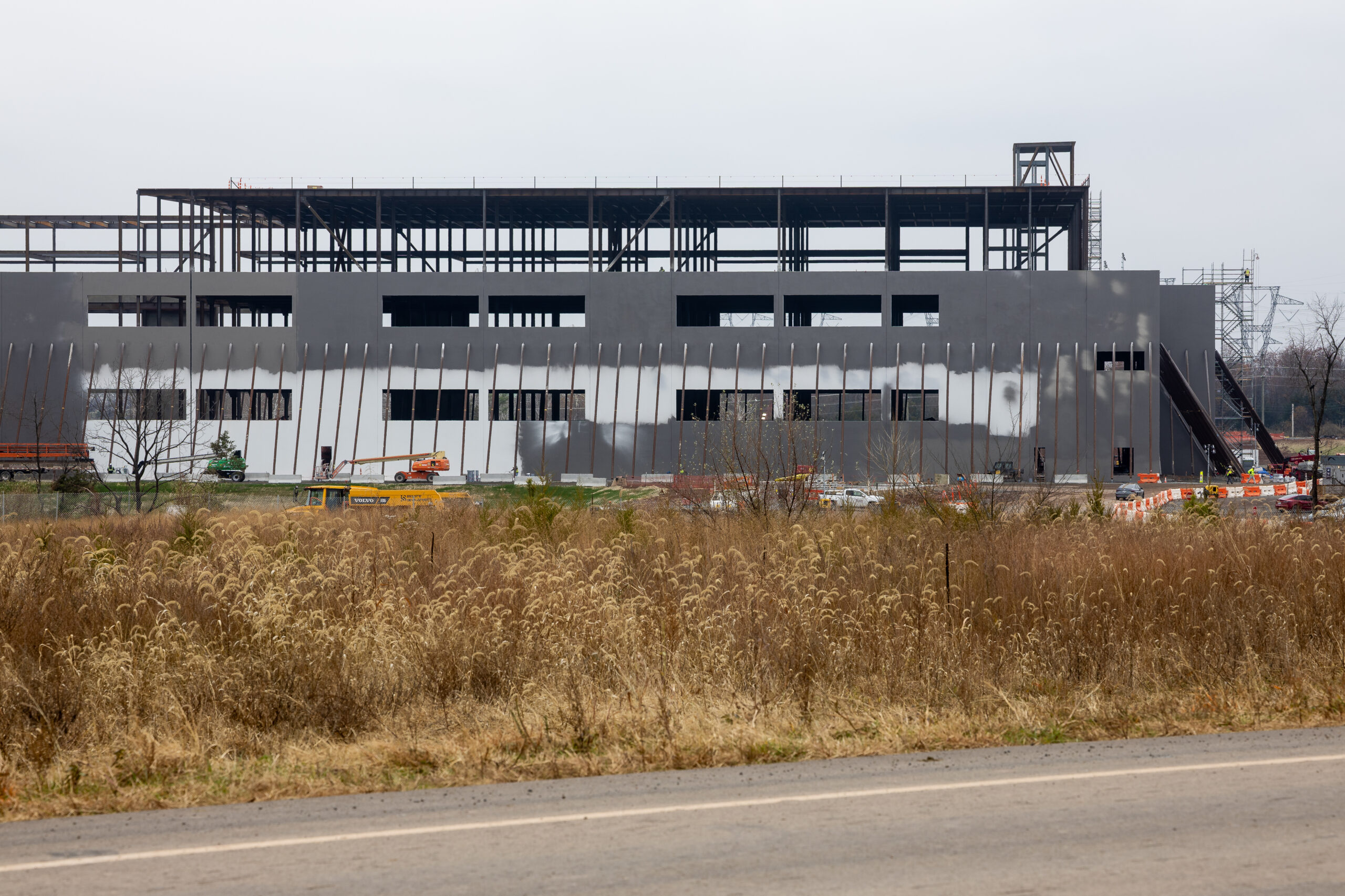
Data centers, once popular with elected officials in both parties, are fast becoming a midterms bogeyman.
Democratic governors are racing to rein in new warehouse projects they once offered up millions of dollars in tax incentives to secure as they face voters furious over soaring electric bills. And President Donald Trump, who has slashed red tape around the industry he’s lauded as a job engine, used his Tuesday State of the Union address to announce he’s told major tech companies to build their own power plants to shield ratepayers from further hikes.
It’s a remarkable pivot by leaders of both parties. And it reflects the rapidly shifting politics around data centers they had hailed as economic generators but are now retreating from as voters blame their proliferation for rising utility costs — part of an overall frustration with high prices that is dominating the midterms.
“The fact that everyone is talking about this all of a sudden shows how quickly this issue is moving and that politicians are reflecting the frustration that people are feeling over paying so much on their energy bills while data centers get tax breaks,” said Jared Leopold, a Democratic strategist and co-founder of climate advocacy group Evergreen Action.
These recent contortions also show both parties are still grappling with the way forward on an increasingly potent political issue.
Democrats harnessed voters’ frustrations over rising utility bills — and their fears that power-hungry data centers could push them higher — to win governor’s offices in New Jersey and Virginia and oust two Republicans on Georgia’s utility regulating commission last fall.
Voters’ worries haven’t ebbed. The POLITICO Poll found in mid-January that voters’ chief concerns about data centers involved household costs. Asked about the drawbacks to building data centers in the U.S., 29 percent of Americans said it would mean higher electricity bills, 24 percent said an increased risk of blackouts and 23 percent said the projects would cost taxpayer money.
Both parties have seized on making tech companies pay for their power as a salve.
Just six months ago, Trump declared he was accelerating federal permitting for data centers and headed to western Pennsylvania to praise companies for investing tens of billions of dollars in energy infrastructure as part of his push to be the “world’s No. 1 superpower in artificial intelligence.”
But on Tuesday, the president said he was negotiating with the companies behind data centers to build their own power plants to secure their power supply “while at the same time lowering prices of electricity” for Americans.
Trump was light on the details about what his “ratepayer protection pledge” actually meant in practice, though the White House said tech companies are expected to head to Washington next week to sign the agreements. But the president has been signaling such a step since at least January, when he said he was working with Microsoft to “ensure that Americans don’t ‘pick up the tab’” for data centers’ power consumption. He also banded together with Democratic governors to push grid operator PJM to control energy prices and tech companies to shoulder the burden of power costs.
Brendan Steinhauser, a Texas-based GOP strategist, said the shift shows Trump and his team “don’t want to be on the wrong side of this.”
“This is smart by the administration to recognize that there are concerns about energy prices and water usage,” said Steinhauser, who serves as CEO of The Alliance for Secure AI, a group that backs more AI industry regulation. “They don’t want to be seen as allowing the companies to accelerate without any input from the community, they don’t want to be seen as on the side of allowing energy prices to go up.”
Democrats don’t, either.
At least half a dozen Democratic governors — several of whom are potential 2028 presidential contenders — used their annual state-of-the-state addresses to pitch regulations or call to retract old sweeteners for an industry they had previously championed.
Illinois Gov. JB Pritzker is pushing to hit pause on tax incentives he’s long touted to lure data centers to his state. Arizona Gov. Katie Hobbs is seeking to eliminate the tax breaks for tech companies she previously backed as a state lawmaker a decade ago, while looking to impose new water-use fees.
New York Gov. Kathy Hochul, who was positioning her state as a “national leader in AI research and innovation,” has rolled out plans to make data center operators pay more for energy or supply their own. Connecticut Gov. Ned Lamont signaled his state would look to “slow down new data centers,” unless they add more power generation.
Oregon Gov. Tina Kotek, who supports legislation to expand tax breaks for data centers, has also cautioned the industry’s growth rate is “not sustainable” in her state. She launched an advisory committee to recommend how to protect “affordable power” and other resources while still fostering economic development.
And Pennsylvania Gov. Josh Shapiro, who streamlined permitting to help his state be “all in on AI,” is now calling on his legislature to codify a set of “responsible infrastructure development” standards for data center developers — including hiring locally and bringing their own power generation — as he looks to mitigate voters’ concerns. A survey released Wednesday from Pennsylvania pollster Quinnipiac University showed 68 percent of registered voters would oppose a data center being built in their community, including 81 percent of Democrats, 67 percent of independents and 53 percent of Republicans.
Shapiro insisted his new guardrails were “not a shift” when asked last week about the policy rollout. Instead, he cast them as part of his ongoing efforts to balance creating jobs with “holding down energy costs.”
“I’ve always been for the end-users having to bring their own power or generate new power and pay for it so we’re not burdening the local community,” Shapiro told POLITICO on the sidelines of the National Governors Association winter meeting in Washington last week. “We just are more open about it, so anyone thinking about doing business in Pennsylvania now knows what those standards are going to be.”
The proliferation of data centers across battleground states has similarly pushed energy costs to the forefront of key congressional campaigns. Imposing guardrails on the artificial intelligence industry has become a rallying cry for insurgent candidates in primaries and an attack line in competitive districts. Calls are growing on both sides of the aisle for a moratorium on new projects.
Politicians are “beginning to catch up with where their constituents are” in opposing unregulated data center growth, said Mitch Jones, the managing director of policy and litigation for environmental firm Food & Water Watch, which is pushing for a construction pause.
But Maryland Gov. Wes Moore, who has sketched out a similar set of rules for new projects in his state, argued that a “binary” approach to data centers was misguided.
“Oftentimes, when people talk about data centers, it’s either like what they’ve done in Northern Virginia, which is kind of like, ‘let them just run wild and do whatever they want to do.’ Or it’s like trying to put a ban on them. I don’t think either is the right answer,” Moore said in a brief interview at NGA. “I understand how this critical infrastructure is necessary for economic growth. … But industry cannot determine the rules.”






 EUR/HUF