 hir8 - Jámbor Péter

 hir8 Vendég
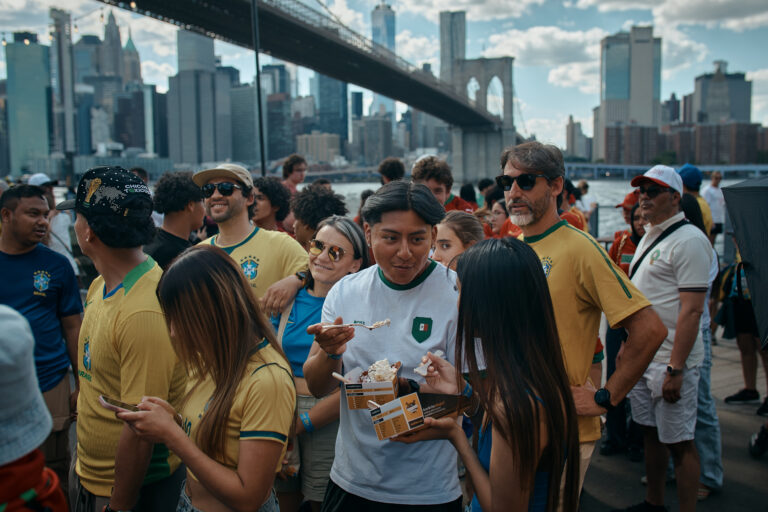
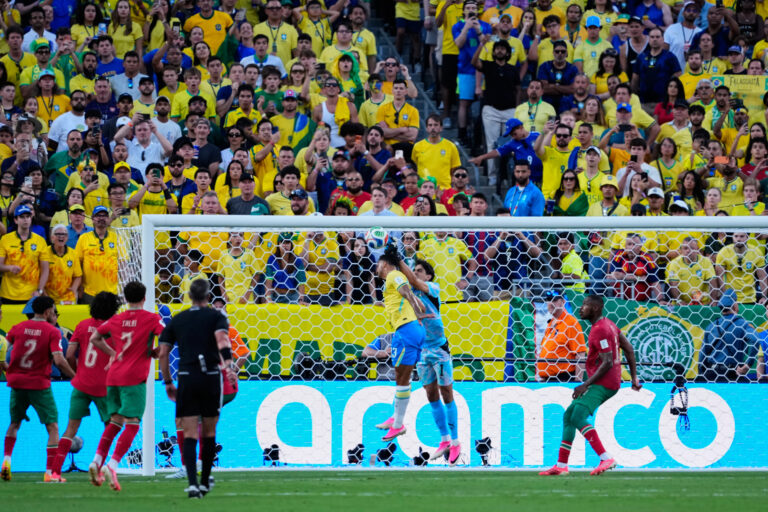
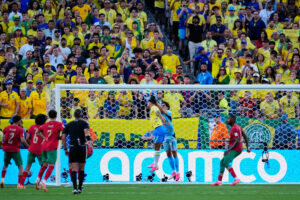
A delightful encounter between Morocco and Brazil just wrapped up at the Meadowlands, just a short train ride from downtown Manhattan. Back across the Hudson River, a potentially decisive Game 5 of the NBA Finals will tip off soon. The World Cup final will take place back here in less than six weeks.
All of a sudden, New York seems like the center of the sports world. And the city has a mayor who is taking full advantage.
Zohran Mamdani has been an ever-present face at Knicks games and at World Cup-related events, including today’s match, opining on both sports and often sporting an Arsenal or a Knicks jersey to boot. In doing so, the avowed socialist mayor is modeling for politicians around the world a new version of lefty sports fandom.
His good fortune on this front is undeniable. Mamdani is a hardcore soccer fan and player; his basketball knowledge is somewhat less developed, but he’s able to talk about the Knicks and sound like an authentic supporter. He has avoided pitfalls like the one that tripped up New York’s Democratic Gov. Kathy Hochul when she recently said she would “ask [President Donald Trump] to name the starting lineup of the 1993 championship team and see how he does.”
(It was an almost unforgivable gaffe — the 1993 Knicks famously lost in heartbreaking fashion to Michael Jordan’s Chicago Bulls and failed to reach the NBA Finals.)
“He doesn’t sound like he’s speaking a second language like so many Democrats do when they talk about sports,” said a source close to Mamdani, granted anonymity to candidly discuss Democratic Party messaging strategy. “He’s not putting on — with other Democrats, you run into an issue where they don’t know who [Knicks star] Jalen Brunson is. They don’t know who KAT is. They don’t have Linsanity memories.”
Mamdani laces his World Cup press conferences with soccer references, so much so that Hochul has begun to call him a “super fan.”
In an April event the two pols did together on Staten Island, the mayor recalled going to the World Cup in South Africa in 2010 and said his fondest memories from that tournament included playing beach soccer in Durban.
At a midtown press conference last week laying out the city’s public transportation plans, Mamdani said the city would not “park the bus,” a joke about a derided defensive strategy that is familiar to soccer fans but that he had to explain to the American press corps.
When Mamdani earlier this week announced a massive World Cup watch party in Central Park, he did so alongside George Weah, the former Liberian president and soccer star who is also father of American forward Tim Weah.
“When I was a child growing up in East Africa, there were towering figures, and then there was George Weah, the first African player to ever win the Ballon d’Or,” he said. “If you had told seven-year-old me that I would one day go into the same line of work as this man, I would be extremely disappointed to understand that you meant politics.” Then he got in a subtle dig at Weah for playing for Chelsea — a rival to Mamdani’s Arsenal, whose uniform the mayor turned into a custom kurta during the Muslim festival of Eid al-Adha in May.
But he has also treated his commentary on sports as almost separate from his broader political agenda. While Sen. Bernie Sanders (I-Vt.) (still angry about the Brooklyn Dodgers’ owner moving them to Los Angeles in his youth) calls MLB team owners “baseball oligarchs,” Mamdani has assiduously avoided comments on Knicks owner James Dolan’s controversial invite to Trump to watch the finals, aside from noting that he would be in a much cheaper part of Madison Square Garden, with a standing-room-only ticket.
“Engaging with the sphere of sports for politicians can be more politically effective by being less explicitly political,” said Jules Boykoff, a former professional soccer player who is a professor at Pacific University and has written multiple books on sports and politics.
Mamdani’s sports-focused mayoralty hasn’t been all sunshine. After he attended a New York Mets game earlier this year and the baseball team went on a long losing streak, the New York Post dubbed it the “curse of the Mambino.” Any politician who dares to be a public sports fan exposes themselves to the vicissitudes of a game they cannot control — no matter how powerful any lucky jersey is.
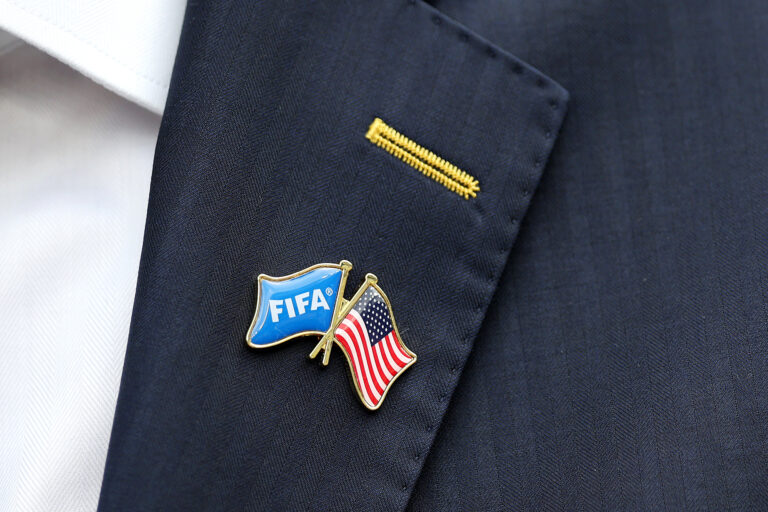
But flexing sports fandom can work to advance a political agenda as well. If sports are often a reflection of society, and the World Cup is the globe’s most important sporting event, it stands to reason that a politician who can confidently talk about sports has a chance to benefit. Working with FIFA, which is frequently excoriated by the global left, Mamdani secured 1,000 tickets for just $50 to see World Cup games that are otherwise selling for thousands of dollars. That’s a very public way to advance his democratic socialist agenda.
“I think it could be effective politically, moving through the sport of soccer to make political arguments without actually talking about politics directly,” said Boykoff. “Just getting people tickets, making sure the working class is involved — I do see that as very much a path forward.”



 EUR/HUF